Used Volkswagen Golf Review 2026: The Ultimate UK Buyer’s Guide
For over five decades, the Volkswagen Golf has been the yardstick by which all other family hatchbacks are measured. In the UK used car market, it occupies a unique position: it is neither the cheapest nor the most exciting, yet it remains one of the best-selling used vehicles year after year. Whether you are a first-time buyer looking for something reliable or a family needing a dependable all-rounder, the Golf is consistently the “default” recommendation for a reason.
In this comprehensive guide, we dissect why the Golf remains a powerhouse of the second-hand market, which models to target, and exactly what to look out for to ensure your purchase is a success rather than a headache.
Quick Verdict
The Volkswagen Golf is the automotive equivalent of a well-tailored suit: it fits almost any situation, is built to last, and never goes out of style. While it commands a slight price premium over rivals like the Ford Focus or Vauxhall Astra, that extra cost pays for superior build quality, strong residual values, and a mature, composed driving experience. For 2026 buyers, a Mk7.5 (2017–2020) model represents the “sweet spot” of value, technology, and reliability.
Why Buy Used?
The UK used car market is currently dominated by compact hatchbacks, with millions of transactions annually. Choosing a used Golf allows you to bypass the initial depreciation hit that plagues new car buyers, while still enjoying modern safety features, respectable fuel economy, and the refinement of a premium-feeling cabin. Furthermore, because of the sheer volume of Golfs sold in the UK, you have the luxury of being picky. You can afford to hold out for a full service history and the exact specification that suits your needs.
Pros & Cons
Pros
- Broad Appeal: Understated, sophisticated styling that doesn’t date.
- Build Quality: A cabin that feels a class above most mainstream competitors.
- Powertrain Variety: From frugal diesels for high-mileage drivers to punchy petrols and efficient hybrids.
- Resale Value: Strong demand ensures your money is well-protected.
- Ride Comfort: Exceptionally composed on British roads, balancing agility with compliance.
Cons
- Premium Pricing: You will pay more for a Golf than an equivalent Ford or Vauxhall.
- Infotainment Learning Curve: Later models with touch-sensitive controls can be fiddly.
- DSG Maintenance: Automatic gearboxes require diligent, non-negotiable servicing to remain reliable.
- Boot Space: Slightly smaller than some newer, more “lifestyle-focused” SUV rivals.
Exterior Design
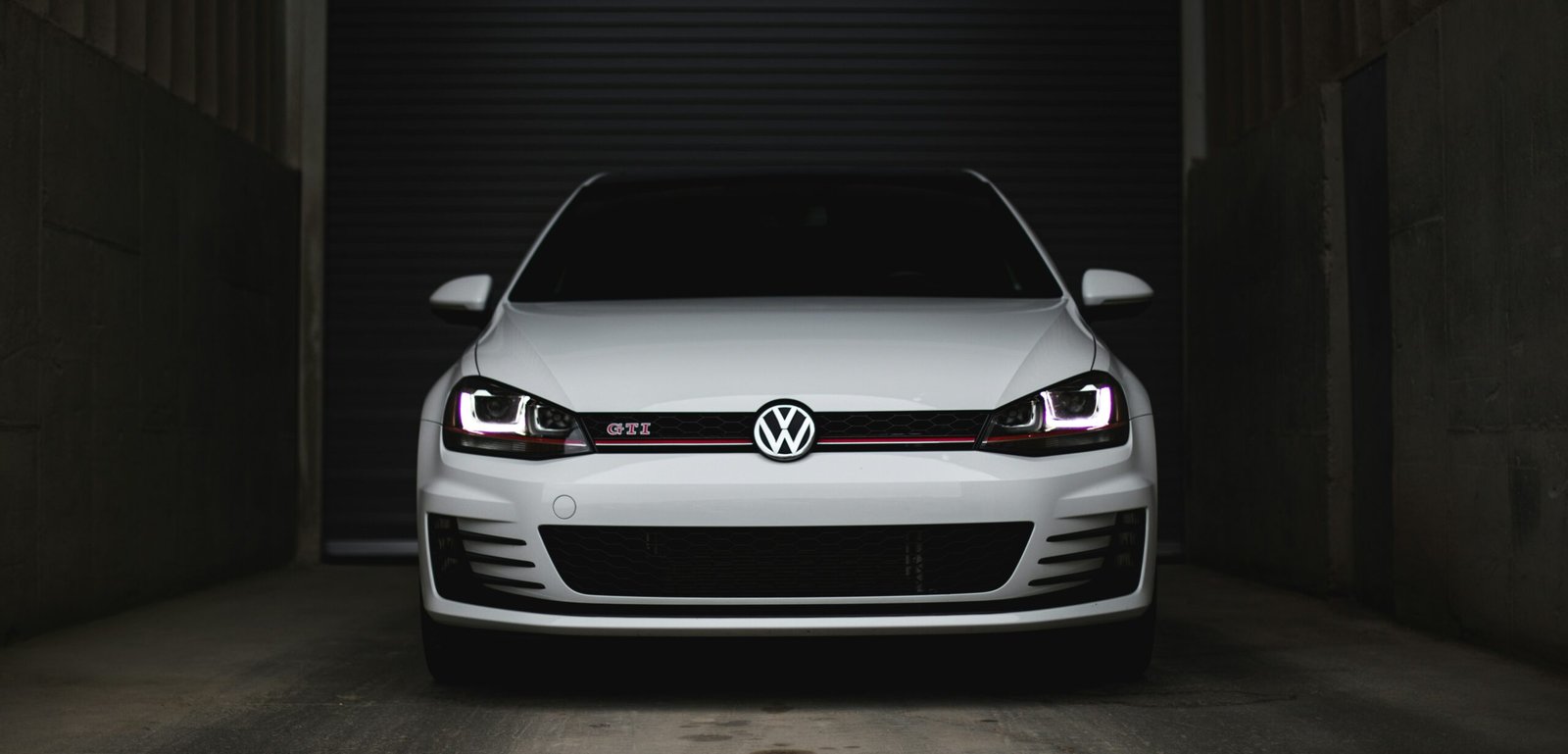
The Golf’s design philosophy has always been “evolution over revolution.” It is clean, minimalist, and functional. Whether you look at a Mk7 or the current Mk8, the proportions remain balanced and timeless. The benefit of this conservative approach for a used buyer is that your car won’t look “old” or unfashionable five years from now, a factor that contributes significantly to its evergreen desirability.
Interior Quality
Inside, the Golf is arguably the best in its class. The dashboard layout is intuitive (with the exception of some Mk8 infotainment quirks), and the materials used are soft to the touch and robust. Even on base-spec models, the soundproofing is excellent, significantly reducing road and wind noise during motorway travel. It is a calming, high-quality environment that excels at long-distance comfort.
Comfort
The seats in the Golf are legendary for their long-distance support. Even after several hours behind the wheel, the ergonomics remain spot-on, with generous adjustment for both the seat and the steering wheel. Rear passengers are well-catered for, with sufficient legroom and headroom to accommodate two adults comfortably or three children.
Practicality
Boot Space
The hatchback offers a versatile load area, typically ranging from 380 litres in the Mk7/Mk7.5 to slightly different figures in hybrid variants due to battery placement. It is a square, usable space that is easy to load, though a slightly high boot lip can make lifting very heavy items a bit of a workout.
Passenger Space
The interior is exceptionally well-packaged. The cabin feels airy, and the large door apertures make entry and exit easy, which is a major plus for parents installing child seats or commuters hopping in and out throughout the day.
Engine Options
- 1.5 TSI Petrol: Widely considered the “sweet spot.” It offers a perfect balance of refinement, punchy power (130hp or 150hp), and fuel efficiency.
- 1.4 TSI Petrol: Found in older Mk7s, this engine is reliable if maintained but can suffer from carbon build-up.
- 2.0 TDI Diesel: The gold standard for high-mileage motorway drivers. It is exceptionally efficient and effortless at speed.
- 1.0 TSI: A three-cylinder option that is great for city driving but can feel strained when the car is fully loaded on a motorway.
- Hybrid/GTE: Excellent for those with home charging, offering impressive electric-only ranges for short, daily commutes.
Performance & Driving Experience
The Golf does not pretend to be a sports car, yet it handles corners with a precision and stability that few rivals can match. The steering is light and accurate, and the chassis is incredibly well-sorted. It is the definition of a “composed” drive—it handles urban potholes and motorway expansion joints with equal aplomb.
Reliability
The Volkswagen Golf is generally reliable, but it is a complex machine that demands adherence to service schedules. Unlike simpler cars that might tolerate skipped oil changes, a Golf’s longevity is tied directly to its maintenance history.
Common Problems to Check Before Buying
- DSG Gearbox: This is the most critical area. If you are test-driving an automatic, look for any hesitation or “judder” when pulling away from a standstill.
- Water Pump: Early 1.4/1.5 TSI engines have a known history of water pump issues. Check the service history to see if it has been replaced.
- Infotainment (Mk8): Early Mk8 models (2020–2021) suffered from software bugs. Ensure all recalls and software updates have been applied.
- Carbon Build-up: On direct-injection petrol engines, a lack of “Italian tune-ups” (spirited driving) can lead to valve deposits.
MOT & Service History Advice
Never buy a used Golf without a verifiable service history. We strongly recommend choosing a car that has been serviced at a VW dealer or a reputable independent specialist. Use the UK Government’s MOT history checker to verify the car’s past. A history of “advisories” for tyres or brakes is normal, but repeated issues with suspension or electronics should be a red flag.
Typical Used Market Prices (Estimates 2026)
- Mk7 (2013–2017): £6,000 – £12,000 (Mileage: 60k–100k)
- Mk7.5 (2017–2020): £12,000 – £19,000 (Mileage: 30k–70k)
- Mk8 (2020–2023): £18,000 – £28,000 (Mileage: 15k–50k)
Note: Prices vary significantly based on trim (S, SE, R-Line, GTI) and condition.
Buying Checklist
- Test Drive: Always drive the car when the engine is cold to listen for unusual noises.
- Gearbox: Perform a “crawling test” in slow traffic to check the DSG transmission.
- History Check: Use a reputable service like HPI or CarVertical to check for hidden accident history or outstanding finance.
- Tyres & Brakes: Check the thickness of the brake discs and the age/tread of the tyres.
- Electronics: Test every screen, button, and climate control feature—they are expensive to fix.
Who Should Buy It?
The Golf is ideal for families, professionals, and anyone who wants a “one-car-does-it-all” solution. It is also a fantastic choice for those who want a premium-feeling hatchback without the badge snobbery (and insurance premiums) of some luxury marques.
Who Should Avoid It?
If you are looking for a car with the lowest possible entry price and rock-bottom maintenance costs (like a base-spec supermini), the Golf might be overkill. Additionally, if you dislike touchscreens and prefer a dashboard full of physical dials, you may find the latest Golfs slightly frustrating.
Expert Rating Table
| Category | Rating |
| Reliability | 4.0/5 |
| Running Costs | 4.0/5 |
| Performance | 4.0/5 |
| Comfort | 5.0/5 |
| Interior | 5.0/5 |
| Technology | 4.0/5 |
| Practicality | 4.5/5 |
| Safety | 5.0/5 |
| Value for Money | 4.5/5 |
| Overall Score | 4.4/5 |
Frequently Asked Questions (FAQ)
- Which engine is best for the UK? The 1.5 TSI petrol is widely considered the best all-rounder.
- Is the DSG automatic reliable? It is very reliable, provided the 40,000-mile fluid change interval is strictly followed.
- Is the Golf expensive to insure? It generally falls into reasonable insurance groups for a family car, but GTI/R models are significantly higher.
- How long do Golf clutches last? This depends entirely on driving style; expect 80,000+ miles under normal use.
- Should I avoid the Mk8? Not necessarily, but stick to 2022+ models to avoid the early software teething issues.
- Does the Golf have good safety ratings? Yes, it consistently achieves 5 stars in Euro NCAP tests.
- Is it better than a Ford Focus? The Golf feels more premium inside, while the Focus is arguably more “fun” to drive.
- Are parts expensive? Parts are widely available at competitive prices due to the sheer number of cars on the road.
- What is the best trim level? The SE trim is the sensible sweet spot; R-Line is best for those wanting extra styling.
- Is the estate version practical? Yes, the “Golf Estate” is a superb load-lugger with excellent resale values.
Conclusion
The Volkswagen Golf remains the gold standard because it simply doesn’t have any major weak points. It is comfortable, efficient, safe, and sophisticated. While you might be tempted by cheaper or more “trendy” alternatives, the Golf’s long-term ownership experience—defined by its refined driving dynamics and solid build—justifies the premium price. Do your due diligence, find a well-maintained service history, and you will likely end up with one of the most satisfying purchases in the automotive world.