Best Hybrid Cars UK 2026: The Definitive Buying Guide
Quick Recommendation
If you want the best all-round hybrid that balances efficiency, reliability, and everyday usability, the Toyota RAV4remains the gold standard [1.1.2]. For families prioritising a blend of modern tech and space, the Kia Sportage Hybrid is our top pick [1.1.2]. If you need maximum cabin versatility, the Honda Jazz is peerless for its size [1.1.3].
Introduction
The UK automotive landscape in 2026 is dominated by the hybrid revolution. As drivers transition away from pure petrol and diesel power, hybrid vehicles—spanning self-charging (HEV) and plug-in (PHEV) models—have emerged as the most practical bridge to a fully electric future. They offer the peace of mind of an internal combustion engine for long motorway hauls, while delivering significant improvements in fuel efficiency and lower emissions in urban environments [1.1.2, 1.3.1].
This guide is designed to help you navigate the crowded market and choose the right hybrid for your lifestyle, whether you’re a city commuter, a family road-tripper, or a high-mileage professional.
How We Picked These Cars
We have evaluated these vehicles based on a rigorous set of criteria to ensure they meet the demands of British motorists:
- Real-World Efficiency: We prioritised cars that exceed official WLTP figures in real-world driving [1.1.3].
- Practicality: Cabin space, boot volume, and ease of fitting child seats were non-negotiable [1.1.2, 1.1.3].
- Reliability: We looked at long-term brand track records and warranty length [1.1.2, 1.1.3].
- Running Costs: Combined fuel, tax, and anticipated maintenance savings [1.3.1].
- Tech & Safety: Infotainment intuitiveness and standard-fit driver assistance systems [1.1.2].
Top 10 Best Hybrid Cars List
1. Toyota RAV4 (Self-Charging & Plug-in)
The definitive hybrid SUV. It remains the UK’s favourite for its blend of rugged capability and bulletproof reliability [1.1.2].
- Best For: Families seeking long-term reliability and fuel efficiency.
- Key Advantages: Outstanding reliability, smooth hybrid system, large boot [1.1.2].
- Main Disadvantages: Infotainment interface is functional but lacks the “wow” factor of newer rivals [1.1.2, 1.2.2].
- Expert Verdict: The default choice for those who value peace of mind above all else [1.1.2].
2. Kia Sportage (Hybrid & Plug-in)
With its striking design and class-leading 7-year warranty, the Sportage is a brilliant all-rounder [1.1.2].
- Best For: Families wanting modern aesthetics and peace of mind [1.1.2].
- Key Advantages: Modern cabin, huge standard spec, long warranty [1.1.2].
- Main Disadvantages: The dual-clutch transmission can be slightly busier in traffic than Toyota’s e-CVT [1.1.2].
- Expert Verdict: A stylish, practical SUV that makes the transition to hybrid living effortless [1.1.2].
3. Hyundai Tucson Hybrid
The Tucson shares much of its DNA with the Sportage but offers a slightly more comfortable, mature driving experience [1.1.2].
- Best For: Buyers prioritising ride comfort and long-distance cruising [1.1.2].
- Key Advantages: Excellent ride quality, advanced driver aids, very efficient [1.1.2].
- Main Disadvantages: The cabin relies heavily on touch-sensitive controls that can be fiddly [1.1.2].
- Expert Verdict: A sophisticated alternative to more utilitarian SUVs [1.1.2].
4. Honda Jazz (Self-Charging)
The “Tardis” of the hybrid world. Despite its small footprint, its interior space is unmatched [1.1.3].
- Best For: Urban families and city drivers needing maximum space in a small car [1.1.3].
- Key Advantages: Magic Seats, incredible real-world MPG, very easy to park [1.1.3].
- Main Disadvantages: Not the most exciting car to look at or drive [1.1.3].
- Expert Verdict: The most practical small car you can buy, bar none [1.1.3].
5. Toyota Yaris Cross
Perfect for those who want the fuel-sipping benefits of a hybrid with the high-riding stance of an SUV [1.1.3].
- Best For: Small families and city dwellers wanting a compact crossover [1.1.3].
- Key Advantages: Market-leading fuel economy, compact dimensions, solid build [1.1.3].
- Main Disadvantages: Rear cabin space is tight compared to larger rivals [1.1.3].
- Expert Verdict: A masterclass in sensibility and fuel efficiency [1.1.3].
6. Ford Kuga (Plug-in Hybrid)
A favourite among company car drivers, the Kuga PHEV offers a great electric-only range for daily duties [1.1.2].
- Best For: Commuters who can charge at home and want a petrol backup [1.1.2].
- Key Advantages: Good electric-only range, engaging handling, low BIK tax [1.1.2].
- Main Disadvantages: Interior materials don’t feel as premium as some rivals [1.1.2].
- Expert Verdict: A highly practical PHEV that excels on the commute [1.1.2].
7. Volvo XC60 (Plug-in Hybrid)
For those wanting a premium, safe, and highly refined driving experience [1.1.2].
- Best For: Buyers seeking luxury and top-tier safety technology [1.1.2].
- Key Advantages: Exceptional build quality, brilliant seats, very safe [1.1.2].
- Main Disadvantages: Expensive to buy and maintain [1.1.2].
- Expert Verdict: The benchmark for premium, safe, family hybrid motoring [1.1.2].
8. Nissan Qashqai (e-Power)
A unique hybrid system where the engine purely acts as a generator for the electric motor [1.2.2].
- Best For: Urban drivers who want the smooth feel of an EV without plugging in [1.2.2].
- Key Advantages: Smooth, EV-like driving experience in town [1.2.2].
- Main Disadvantages: Can be thirsty on high-speed motorway runs [1.2.2].
- Expert Verdict: A clever, seamless solution for hybrid-curious buyers [1.2.2].
9. Mercedes-Benz GLC 300e
The go-to for those who want luxury coupled with a massive electric-only range [1.2.3].
- Best For: Business users and those who demand a premium experience [1.2.3].
- Key Advantages: Massive electric-only range, impeccable refinement [1.2.3].
- Main Disadvantages: High price point [1.2.3].
- Expert Verdict: Currently the king of premium plug-in hybrid SUVs [1.2.3].
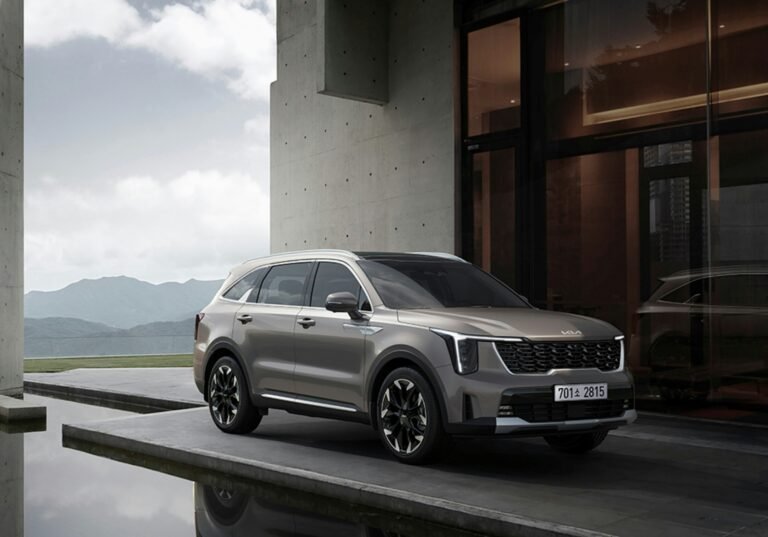
10. Kia Sorento (Plug-in Hybrid)
Rare, but brilliant. It is one of the very few affordable seven-seat plug-in hybrids [1.2.3].
- Best For: Large families needing seven seats and electric-only capability [1.2.3].
- Key Advantages: Genuine seven seats, high equipment levels, excellent warranty [1.2.3].
- Main Disadvantages: Large footprint can be tricky for tight parking [1.2.3].
- Expert Verdict: The only sensible choice for large families who need plug-in flexibility [1.2.3].
Buying Advice
Petrol vs. Hybrid vs. Electric
- Petrol: Still best for low-mileage users who prioritise low upfront costs [1.3.1].
- Self-Charging Hybrid: The perfect “fit and forget” solution for those who want better fuel economy without needing to plug in [1.2.2].
- Plug-in Hybrid (PHEV): Ideal for those with a home charger who do short daily commutes on electricity and regular long trips on petrol [1.1.2, 1.3.2].
- Electric: The most cost-effective choice if you can charge at home and mainly do shorter-to-medium trips [1.1.2].
New vs. Nearly New
Nearly new (6-18 months) cars are often the smartest buy. You save significantly on the initial depreciation hit while typically retaining the remainder of the manufacturer’s warranty—a massive benefit for brands like Kia and Toyota [1.2.3].
Features Worth Prioritising
- Safety Tech: Adaptive cruise control and blind-spot monitoring are essential for family safety [1.1.2].
- Parking Aids: Reversing cameras and 360-degree views are game-changers for SUVs [1.1.3].
- Smartphone Connectivity: Wireless Apple CarPlay or Android Auto is a must-have for modern navigation and media [1.2.3].
Comparison Table
| Car | Price Category | Fuel Type | Best Feature | Main Weakness | Ideal Buyer |
| Toyota RAV4 | Mid | HEV/PHEV | Reliability | Dated Tech | High-mileage |
| Kia Sportage | Mid | HEV/PHEV | Warranty | Trans. busy | Families |
| Honda Jazz | Budget/Mid | HEV | Cabin Space | Styling | City/Urban |
| Volvo XC60 | Premium | PHEV | Safety/Quality | High Cost | Luxury seekers |
| Kia Sorento | High | PHEV | 7 Seats | Large Size | Large Families |
Frequently Asked Questions
- Is a hybrid car worth it in 2026? Yes, if you choose the right type (HEV or PHEV) for your specific driving patterns [1.1.2].
- What is a self-charging hybrid? It’s a car that uses a petrol engine and a small battery to power itself; you never plug it into the mains.
- Do hybrid cars save money? They save significantly on fuel in urban environments and typically have lower tax and maintenance costs.
- Are hybrid cars reliable? Generally, yes—especially brands like Toyota and Honda, which have decades of experience with hybrid powertrains.
- Which hybrid has the best electric range? Premium PHEVs like the Mercedes GLC300e offer the longest electric-only range, often over 70 miles.
- Can I tow with a hybrid car? Many can, but always check the specific towing capacity of the model, as some hybrids have lower limits than petrol/diesel counterparts.
- Do hybrid cars require different maintenance? They generally require less maintenance for brakes due to regenerative braking, but the systems are more complex.
- Is a PHEV better than a full hybrid? Only if you can charge it at home regularly; otherwise, a self-charging hybrid is more efficient.
- Are hybrid cars expensive to insure? Not typically; they are usually in line with equivalent petrol models.
- Do I need a home charger for a hybrid? Only for a plug-in hybrid (PHEV); self-charging hybrids never require a charger.