Kia Sportage vs Hyundai Tucson: Which One Should UK Buyers Choose?
Quick Verdict
The Kia Sportage is our recommended winner for most UK buyers, primarily due to its industry-leading seven-year warranty, class-leading infotainment, and exceptional all-round value [1.1.2, 1.2.1, 1.2.2].
- Choose the Kia Sportage if: You prioritise a long warranty, tech-heavy interior, and bold, modern design [1.1.2].
- Choose the Hyundai Tucson if: You prefer a slightly more restrained, premium aesthetic and require maximum boot capacity for family gear [1.1.2, 1.2.1].
Introduction
In the competitive UK family SUV segment, two names consistently dominate the sales charts: the Kia Sportage and the Hyundai Tucson. As sibling models sharing the same underlying platform and powertrains, they are closely matched on paper [1.1.4, 1.2.4]. However, their distinct personalities and packaging choices create a genuine dilemma for buyers. Whether you are a daily commuter, a family looking for practicality, or a business user seeking efficiency, this guide breaks down exactly what sets them apart to help you make an informed decision.
Vehicle Overview
Kia Sportage Overview
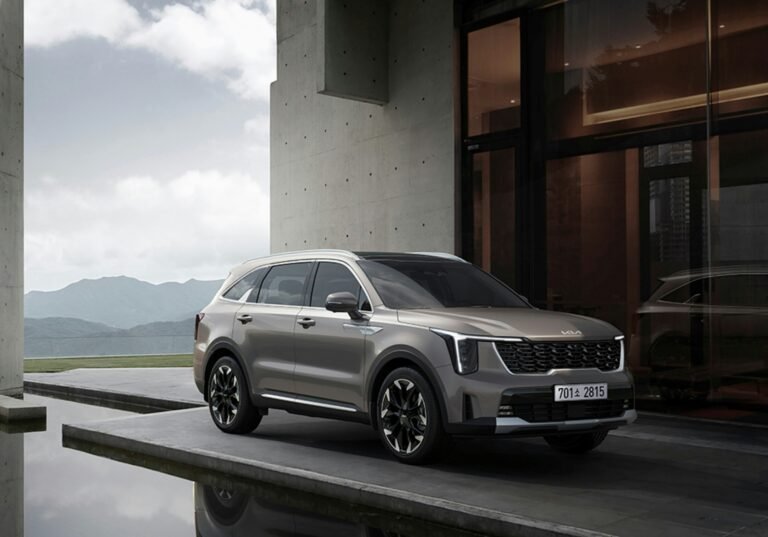
The latest Kia Sportage has embraced a radical “Opposites United” design language, making it one of the most expressive SUVs on the road [1.2.1]. It focuses on blending bold style with high-tech interiors, aiming to offer premium features at a mainstream price point [1.1.2, 1.2.3].
Hyundai Tucson Overview
The Hyundai Tucson takes a “Sensuous Sportiness” approach, featuring geometric lines and a boxy, sophisticated silhouette [1.2.1]. It is often perceived as the more mature, design-led sibling, focusing on subtle refinement and an upscale cabin experience [1.1.2, 1.2.1].
Design Comparison
The aesthetic divide is stark. The Sportage is aggressive, with “boomerang” daytime running lights and sharp body lines that demand attention [1.1.4, 1.2.2]. It feels adventurous and fresh. The Tucson, by contrast, uses hidden lighting signatures integrated into a geometric front grille, creating a more cohesive, “modern art” appearance [1.1.4, 1.2.1].
- Road Presence: The Sportage is polarising and bold; the Tucson is elegant and composed.
- Dimensions: Both are similarly sized, offering a commanding driving position that UK drivers love [1.1.4].
Interior Comparison
Inside, both vehicles are spacious and well-assembled, but the atmosphere differs [1.1.4, 1.2.2].
- Kia Sportage: Features a curved, tech-forward display that feels like a command centre [1.1.2]. The infotainment system is arguably the best in class for intuitiveness and speed [1.1.2, 1.1.4].
- Hyundai Tucson: Boasts a cleaner, more minimalist aesthetic [1.1.4]. Recent facelifts have integrated a smart dual-screen setup that feels extremely premium [1.1.2, 1.2.3].
Both offer excellent comfort for five adults, with comparable legroom that makes long-distance travel a breeze [1.1.1, 1.2.1].
Technology Comparison
Kia takes a slight lead in technology integration [1.1.2]. The Sportage’s 12.3-inch screen is standard across most trims and is highly responsive [1.1.2, 1.1.4]. While the Tucson is also packed with kit—including wireless Apple CarPlay/Android Auto and advanced safety suites—the Sportage’s user interface is widely regarded as more user-friendly for those who prefer straightforward menus [1.1.2, 1.1.4].
Practicality Comparison
If you need raw space, the Tucson holds a narrow edge [1.2.1].
- Boot Space: The Tucson offers a slightly larger boot capacity in standard petrol models compared to the Sportage [1.1.2, 1.1.4]. However, both vehicles see a reduction in space if you opt for hybrid or plug-in hybrid (PHEV) powertrains, which house batteries under the floor [1.1.2].
- Flexibility: Both feature 40:20:40 split-folding rear seats, providing excellent load-carrying versatility [1.1.2].
Performance & Driving Experience
Because they share platforms, the driving experience is similar: smooth, secure, and easygoing [1.1.2, 1.1.4]. Neither car claims to be a sports SUV; they are designed for family comfort [1.1.2].
- Ride Quality: The Tucson is slightly softer, favouring a “magic carpet” ride, which is ideal for motorway cruising [1.1.2, 1.1.4].
- Handling: The Sportage feels a touch more planted and composed on twisty B-roads, offering light, accurate steering that makes parking effortless [1.1.2, 1.1.4].
Fuel Economy & Running Costs
Both offer a wide range of powertrains: petrol, self-charging hybrid (HEV), and plug-in hybrid (PHEV) [1.1.4, 1.2.2].
- Efficiency: Real-world MPG figures are very similar, often between 40–45 mpg for self-charging hybrids [1.1.2].
- Warranty: This is the game-changer. Kia offers a seven-year/100,000-mile warranty, while Hyundai provides a five-year unlimited-mileage warranty [1.1.2]. For long-term owners, Kia’s coverage is a significant financial benefit [1.1.2].
Comparison Table
| Category | Kia Sportage | Hyundai Tucson |
| Price | Competitive / High Value | Slightly Higher |
| Engines | Petrol/HEV/PHEV | Petrol/HEV/PHEV |
| Fuel Economy | Excellent | Excellent |
| Interior | High-Tech / Intuitive | Premium / Minimalist |
| Boot Space | Good | Excellent (Slightly larger) |
| Technology | Best-in-Class UI | Very Good |
| Safety | High (5 Stars) | High (5 Stars) |
| Warranty | 7 Years / 100k Miles | 5 Years / Unlimited |
| Best For | Value & Long-Term Peace of Mind | Style & Maximum Space |
| Winner | Overall Winner | Runner Up |
Which One Should You Buy?
- Families: Both are brilliant, but the Tucson’s boot edge might sway those with bulky equipment.
- Daily Commuters: The Sportage’s tech and fuel-efficient hybrid options make it a fantastic companion.
- Business Users: The 7-year warranty on the Sportage provides superior depreciation protection and lower risk.
- Budget Buyers: Kia’s entry-level value and generous equipment list make it the winner for those looking to get the most for their money [1.1.1, 1.2.1].
Final Verdict
While the Hyundai Tucson is a masterclass in premium design and space, the Kia Sportage remains the more logical purchase for the majority of UK buyers [1.1.2, 1.2.1]. It manages to package class-leading technology, a bolder aesthetic, and the peace of mind offered by the industry’s best warranty into a single, highly competitive price [1.1.2].
Expert Rating (out of 5)
| Feature | Kia Sportage | Hyundai Tucson |
| Performance | 4/5 | 4/5 |
| Comfort | 4/5 | 4/5 |
| Interior | 5/5 | 4/5 |
| Technology | 5/5 | 4/5 |
| Practicality | 4/5 | 4/5 |
| Reliability | 4/5 | 4/5 |
| Running Costs | 4/5 | 4/5 |
| Value For Money | 5/5 | 4/5 |
FAQs
- Which car is better, the Sportage or Tucson? It depends on your priorities: the Sportage is better for value and warranty, while the Tucson excels in cabin refinement and cargo space [1.1.2, 1.2.1].
- Which is cheaper to maintain? Kia’s 7-year warranty covers more years, potentially saving more on unexpected repairs over long-term ownership [1.1.2].
- Which has better resale value? Both are very strong, but the Kia Sportage often commands a slight edge due to its remaining warranty length [1.2.2].
- Which is more reliable? Both are highly rated, sharing the same platforms and powertrains [1.1.4, 1.2.4].
- Do they use the same engines? Yes, both cars share the same platform and engine options [1.1.4, 1.2.4].
- Which one is more comfortable? The Tucson is slightly softer and better suited for long-distance cruising [1.1.2, 1.1.4].
- Is the boot bigger in the Tucson? Yes, the Tucson offers slightly more cargo volume in non-hybrid models [1.1.2].
- Which infotainment system is better? The Sportage system is widely considered more intuitive and faster to operate [1.1.2, 1.1.4].
- Are these cars good for families? Both are excellent family SUVs with 5-star safety ratings and plenty of interior space [1.1.2, 1.2.5].
- Can I tow with them? Yes, both have respectable towing capacities, though the Tucson occasionally holds a slight numerical advantage depending on the specific engine [1.1.1, 1.2.1].